
Which Pan for Which Purpose?
Cast iron, stainless steel, carbon steel: understanding the differences means buying the right pans once and never looking back.
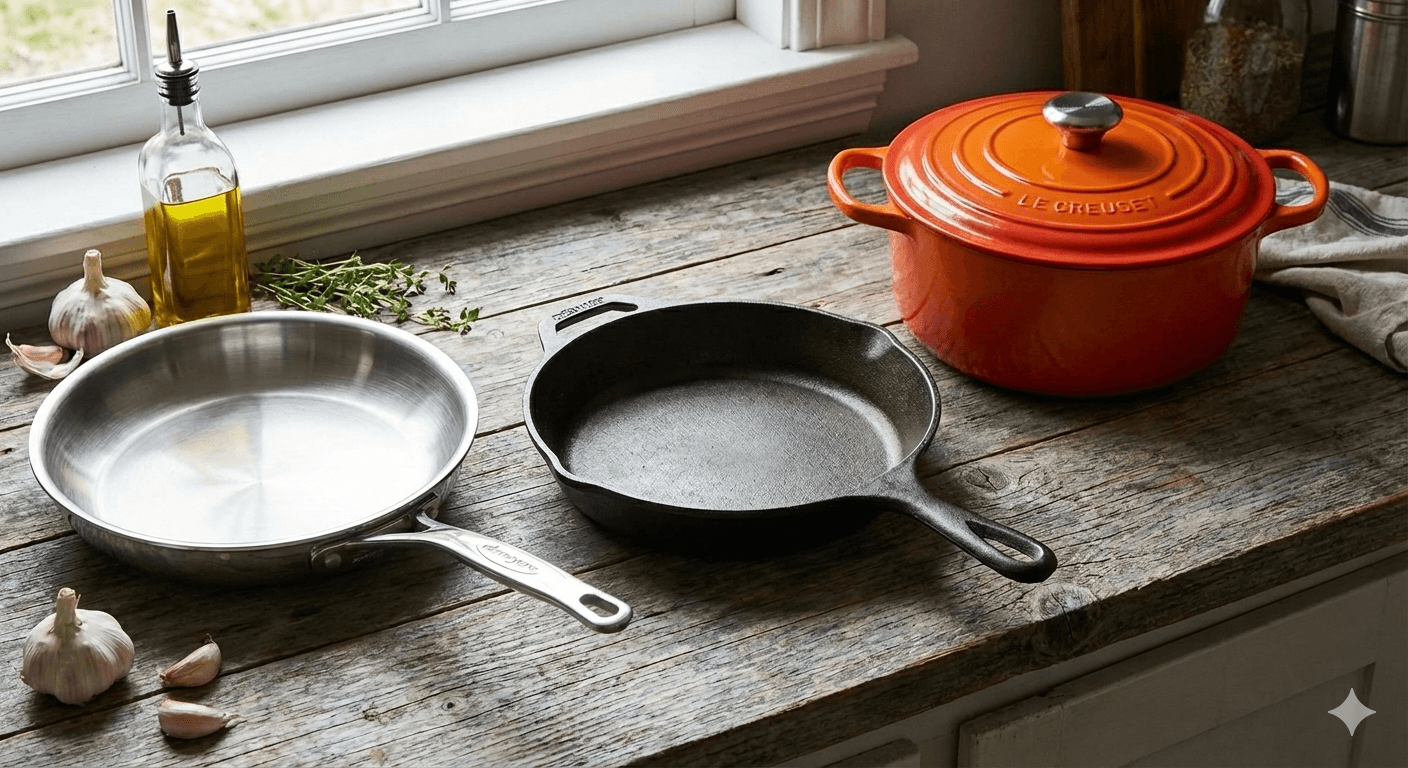
Walk into any cookware store and you'll face a bewildering array of choices. Non-stick aluminum. Copper core tri-ply. Ceramic coated. Pre-seasoned cast iron. Each product promises to be the solution to all your cooking needs. The reality is simpler: there are three types of pans worth buying, and each excels at specific tasks.
Here's what the cookware industry doesn't emphasize: you don't need a dozen different pans. You need three types, chosen based on how you actually cook. Enameled cast iron, stainless steel, and bare iron (cast iron or carbon steel). Buy quality in these three categories, and you've equipped a kitchen for life.
The Lasting Standard Approach: Instead of marketing-driven "complete sets," invest in three types of professional-grade cookware: enameled cast iron for slow cooking, stainless steel for versatility, and bare iron for high-heat searing. Each material lasts generations when chosen correctly. This guide explains which situations demand which pan, so you buy the right equipment once.
The Three Essential Pan Types
Professional kitchens don't use complicated systems. They rely on materials that perform specific jobs exceptionally well. Home cooks benefit from the same approach: understand what each material does best, buy quality versions, and you're equipped for virtually any recipe.
Quick Reference
Enameled Cast Iron
Best for: Braising, slow cooking, stews, oven-to-table dishes, acidic sauces
Why Buy It For Life: Solid cast iron core lasts forever; enamel protects from rust
Stainless Steel
Best for: Searing, sautéing, deglazing, pan sauces, everyday cooking
Why Buy It For Life: Virtually indestructible; no coating to wear out
Bare Iron (Cast Iron & Carbon Steel)
Best for: High-heat searing, oven-to-stovetop, cornbread, steaks, developing fond
Why Buy It For Life: Pure metal that actually improves with decades of use
Enameled Cast Iron: The Dutch Oven You'll Pass Down
If you only buy one expensive piece of cookware in your life, make it a quality enameled cast iron Dutch oven. This is the pan that transforms tough cuts of meat into tender braises, that goes from stovetop to oven without hesitation, that looks beautiful enough to serve directly at the table.
The magic is in the material. Cast iron retains heat exceptionally well, creating an even cooking environment perfect for long, slow cooking. The enamel coating eliminates the seasoning requirements of bare cast iron while preventing reactions with acidic foods like tomatoes or wine. You get all the benefits of cast iron's heat retention without the maintenance challenges.
What Makes Quality Enameled Cast Iron
Not all enameled cast iron is created equal. The difference between a €50 supermarket Dutch oven and a €300 Le Creuset isn't just branding. It's in the quality of the cast iron, the thickness and adhesion of the enamel, and the precision of the lid fit.
- Thick walls: Minimum 3-4mm cast iron for even heat retention
- Quality enamel: Multiple layers, properly fired, resistant to chipping
- Tight-fitting lid: Creates self-basting environment for braising
- Light interior: Makes it easy to see fond development
- Solid handles: Must support significant weight when full
Two brands have dominated this category for over a century: Le Creuset and Staub. Both make exceptional enameled cast iron that will outlive you. Le Creuset offers lighter interior enamel and slightly lower weight; Staub features a black interior that hides staining and self-basting lid nubs. Either choice means buying your last Dutch oven.
When to Reach for Enameled Cast Iron
- Braising meat (short ribs, pot roast, coq au vin)
- Slow-cooked stews and soups
- Anything with acidic ingredients (tomato sauce, wine reductions)
- No-knead bread baking
- Dishes you want to serve directly from the pot
- Long, low-temperature cooking in the oven
💡Size Matters
For most households, a 5.5-liter (24-26cm) Dutch oven hits the sweet spot. Big enough for a family meal, not so large it's unwieldy. If you regularly cook for crowds, consider adding a 7-liter. Smaller sizes (3-4 liter) work well as side dish vessels but are too cramped for most braising.
Stainless Steel: The Professional's Daily Driver
If enameled cast iron is the specialist for slow cooking, stainless steel is the versatile workhorse that handles everything else. This is what you'll reach for 70% of the time: sautéing vegetables, searing proteins, making pan sauces, cooking rice, boiling pasta.
Professional kitchens run on stainless steel because it's virtually indestructible, heats and cools responsively, develops fond beautifully for deglazing, and tolerates any utensil or cleaning method. A quality stainless steel pan will look nearly the same in 40 years as it does today.
Understanding Stainless Steel Construction
Pure stainless steel is a terrible conductor of heat. Quality stainless cookware solves this by sandwiching aluminum or copper layers between stainless steel exteriors. This multi-layer (or "clad") construction gives you stainless steel's durability with much better heat distribution.
- 3-ply construction: Basic standard, with stainless/aluminum/stainless throughout
- 5-ply construction: More layers mean better heat distribution and retention
- Disk-bottom: Cheaper approach with aluminum only in base; avoid for serious cooking
- Copper core: Superior heat conductivity but much more expensive
European manufacturers like Demeyere, BK, and De Buyer have been perfecting stainless steel construction for over a century. These aren't fashion brands. They're equipment suppliers to professional kitchens. When you buy quality stainless steel from proven manufacturers, you're investing in cookware that will outlast you by decades.
When to Reach for Stainless Steel
- Searing proteins (chicken breasts, pork chops, fish)
- Making pan sauces with deglazing
- Sautéing vegetables
- Cooking grains or boiling pasta
- Any acidic preparation (wine sauces, lemon, tomatoes)
- When you need responsive temperature control
- Everyday versatile cooking tasks
The Stainless Steel Learning Curve
Stainless steel has a reputation for being sticky and difficult. This is mostly technique, not the material's fault. The secret is proper preheating and using enough fat. Here's what professionals know:
- Preheat the pan for 2-3 minutes on medium heat
- Add oil or butter and let it heat until shimmering
- Add food and don't touch it. Let it develop a crust
- When ready, food will release easily from the pan
- Deglaze the fond with wine or stock for an instant pan sauce
Once you understand this technique, stainless steel becomes as easy to use as any other material. The difference is that stainless rewards proper technique with superior results: better searing, better fond development, better sauces.
Bare Iron: Cast Iron & Carbon Steel
Bare iron, whether cast iron or carbon steel, occupies a special place in the kitchen. These are pans that get better with age, developing a natural non-stick patina through years of cooking. They're the oldest cookware technology still in widespread use because nothing handles high-heat searing quite like pure metal.
Cast Iron vs. Carbon Steel
Both materials are essentially pure iron with minimal carbon content. The difference is in manufacturing and weight:
Cast Iron
Poured into molds while molten. Very thick and heavy (3-5mm walls). Excellent heat retention but slow to heat up and cool down. Perfect for dishes that need sustained even heat.
Best for: Cornbread, oven cooking, dishes requiring heat retention
Carbon Steel
Stamped or spun from steel sheets. Much thinner and lighter (1.5-2.5mm). Heats quickly and responds fast to temperature changes. Better for stovetop cooking requiring control.
Best for: High-heat searing, wok cooking, responsive temperature control
For most home cooks, carbon steel is the more versatile choice. It's lighter, heats faster, and works better on modern cooktops. Cast iron excels when you need massive heat retention or plan to cook in the oven.
The Seasoning Reality
Both cast iron and carbon steel require seasoning: building up layers of polymerized oil that create a natural non-stick surface. The internet has made this seem complicated and mystical. It's not. You cook with fat, wipe it out, and over time the pan gets better. That's it.
Don't baby these pans. Use them regularly. Cook bacon. Sear steaks. Make cornbread. Each use improves the seasoning. If something sticks or you accidentally cook something acidic that strips some seasoning, just re-season and move on. These pans are nearly indestructible.
When to Reach for Bare Iron
- Searing steaks at very high heat
- Oven-finishing thick proteins
- Cornbread, frittatas, Dutch babies
- Roasting vegetables at high temperature
- When you want the seasoned flavor contribution
- Dishes where metal utensils and high heat are required
💡Avoid With Bare Iron
Acidic dishes (tomato sauces, wine reductions) can strip seasoning and impart a metallic taste. Save these for your stainless steel or enameled cast iron. Also avoid long-simmering liquids or boiling water, which can damage seasoning. Bare iron is for high-heat cooking, not braising or sauce-making.
Building Your Essential Collection
Here's the honest truth: most home cooks can equip a fully functional kitchen with 4-5 pans. Not a 12-piece set. Not a drawer full of specialty equipment. Four or five carefully chosen pieces that cover all cooking scenarios.
The Essential Buy It For Life Collection
1. Enameled Cast Iron Dutch Oven (5.5L / 24-26cm)
Investment: €200-350 (Le Creuset, Staub)
Will last: Lifetime with proper care
Use for: Braising, stews, bread baking, oven cooking
2. Stainless Steel Frying Pan (26-28cm)
Investment: €80-200 (Demeyere, BK, De Buyer)
Will last: 40+ years
Use for: Searing, sautéing, pan sauces, daily cooking
3. Stainless Steel Saucepan with Lid (18-20cm)
Investment: €60-120
Will last: 40+ years
Use for: Grains, vegetables, small portions, reheating
4. Carbon Steel or Cast Iron Skillet (26-28cm)
Investment: €30-80 (De Buyer, Lodge, Skeppshult)
Will last: Generations
Use for: High-heat searing, oven finishing, cornbread
5. Stainless Steel Sauté Pan or Chef's Pan (24cm, with lid)
Investment: €100-180
Will last: 40+ years
Use for: One-pan meals, larger portions, braising on stovetop
Total investment: €470-930
Compare this to replacing cheap cookware every 3-5 years. Over 40 years, cheap pans cost €800-1,600 per piece in replacements, not counting the environmental waste.
What About Non-Stick?
You've probably noticed non-stick pans are absent from this guide. That's intentional. Non-stick coatings are inherently temporary. They wear out, typically within 2-5 years even with careful use. That's the opposite of Buy It For Life philosophy.
If you absolutely need non-stick for specific tasks (eggs, delicate fish), buy the cheapest reasonable option and accept it's temporary. Don't invest in "premium" non-stick. The coating will fail just as fast as cheaper versions. Save your money for cookware that actually lasts.
Better yet, learn to cook eggs in stainless steel or well-seasoned carbon steel. It takes practice, but once mastered, you'll never need non-stick again.
The Buy It For Life Pan Strategy
Here's how to approach building a lifetime cookware collection:
- Start with stainless steel. A quality 26cm frying pan and 18cm saucepan cover most daily cooking. Learn proper technique. These will last 40+ years.
- Add the Dutch oven. When you can afford it, invest in quality enameled cast iron. Le Creuset and Staub go on sale occasionally. Wait for those moments. This purchase will last your lifetime.
- Add bare iron last. Carbon steel or cast iron is the least expensive category. Buy when you're ready to learn seasoning and high-heat technique. These pans last generations.
- Resist the urge to collect. Every additional pan is something to store and maintain. Buy only when you've repeatedly needed something your current collection can't handle.
This isn't about deprivation. It's about being honest: you don't need a dozen pans. You need the right four or five pans, chosen for how you actually cook, purchased from manufacturers with proven track records.
Why This Approach Works
The cookware industry wants you to believe you need specialized equipment for every task. A separate pan for fish. Another for pasta. A griddle pan you'll use twice a year. That model sells more pans, but it doesn't make better cooks.
Professional kitchens tell a different story: chefs produce Michelin-starred meals with the same three types of pans discussed in this guide. They don't have more equipment than home cooks. They have better equipment, used properly, maintained carefully.
Fewer pieces, higher quality, chosen based on actual cooking needs rather than marketing promises. Enameled cast iron for slow cooking, stainless steel for versatility, bare iron for high heat. Three materials, four or five pieces, lifetime durability. Stop replacing cookware every few years. Buy once, buy correctly, and focus on learning to cook instead of shopping for equipment.
Related Reading
This is what cookware looked like before planned obsolescence became the norm. It's still what you'll find in professional kitchens where reliability matters more than trends.
About This Guide
This guide is based on professional kitchen equipment standards, materials science, and the documented performance of quality cookware over decades. We have no affiliation with any cookware manufacturer. Our goal is to help you invest in equipment that lasts a lifetime, not drive affiliate sales of products you don't need.