
Le Creuset vs Staub: Which Enameled Cast Iron is Worth It?
An honest comparison of two heritage brands that have been making cookware for generations.
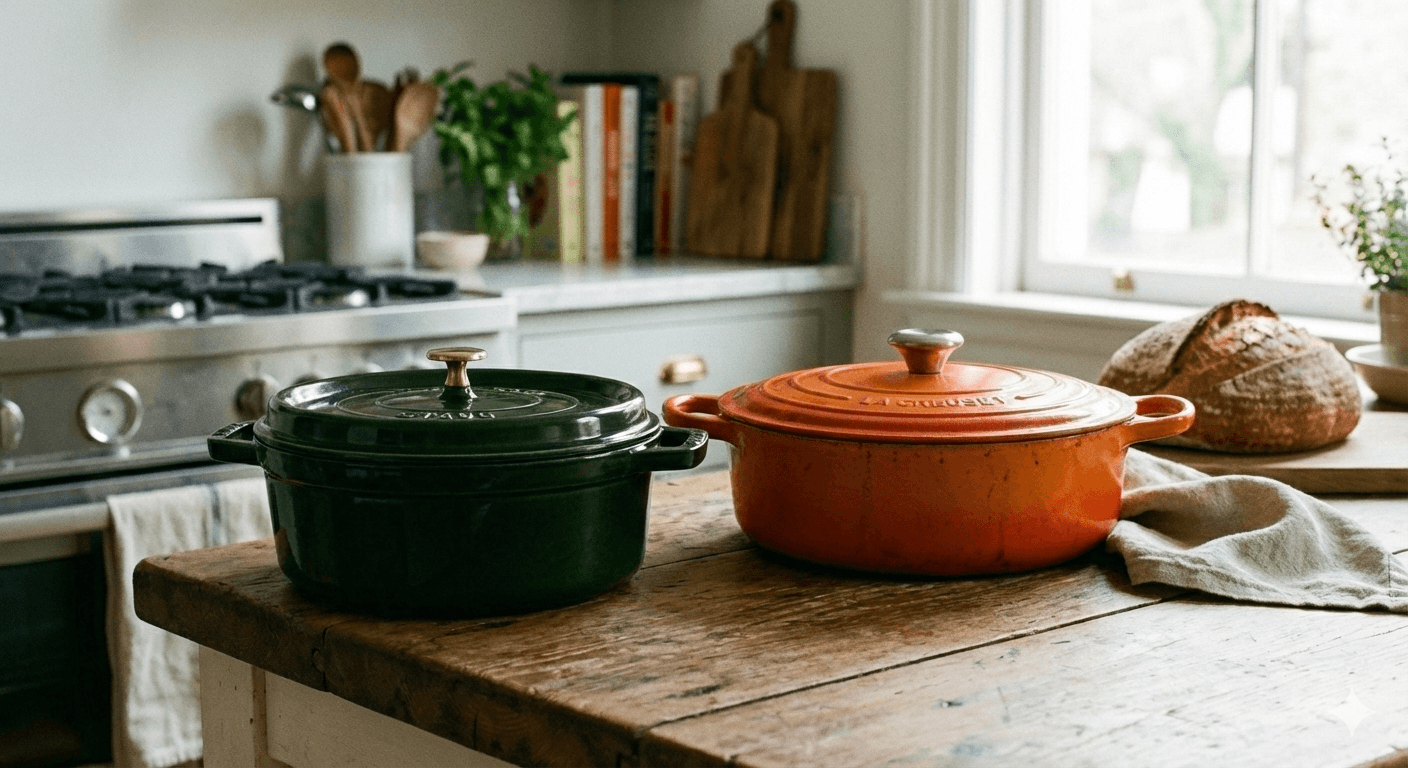
When it comes to enameled cast iron cookware, two names dominate the conversation: Le Creuset and Staub. Both are French heritage brands with decades of experience (Le Creuset since 1925, Staub since 1974). Both make exceptional products that last generations. Both command premium prices. And both genuinely deserve a place in a kitchen focused on quality over quantity.
This isn't a review where we crown a winner. It's a practical comparison to help you understand the actual differences between these two excellent manufacturers, so you can pick the one that fits your cooking style and preferences.
Lasting Standard: Both Le Creuset and Staub are genuine Buy It For Life products. These are multi-generational pieces of cookware that will outlive you if properly cared for. Either brand is an excellent investment. The question isn't whether to buy one, but which one fits your needs and preferences better.
The Heritage
Le Creuset was founded in 1925 in Fresnoy-le-Grand, France. The brand is known for its vibrant colors, smooth enamel finish, and the iconic orange flame color that became synonymous with quality cookware. Le Creuset essentially popularized enameled cast iron and remains the most recognizable name in the category.
Staub came later, founded in 1974 in Alsace by Francis Staub. Despite being the younger company, Staub quickly built a strong reputation among professional chefs for its distinctive matte black interior and innovative lid design with self-basting spikes.
Both brands are now part of larger conglomerates (Le Creuset is family-owned under a holding company; Staub is owned by Zwilling), but both continue to manufacture their premium lines in France, maintaining the quality standards that built their reputations.
Key Differences: What Actually Matters
Interior Finish
Le Creuset: Light-colored enamel interior (sand or cream). Makes it easy to see fond development and monitor browning. Shows staining over time, which is purely cosmetic and doesn't affect performance.
Staub: Matte black enamel interior. Doesn't show staining or wear marks. Some cooks find it harder to judge browning, though this becomes less of an issue with experience.
Both interiors are non-reactive and won't affect food flavor. Neither requires seasoning like bare cast iron.
Lid Design
Le Creuset: Smooth interior lid. Traditional design that's been proven for nearly a century. Condensation drips back into the pot naturally.
Staub: Interior spikes on the lid. Designed to catch condensation and redistribute it evenly over food, creating a continuous self-basting effect. This is Staub's signature innovation.
The self-basting spikes are clever engineering, though both designs produce excellent results in practice.
Weight and Handles
Le Creuset: Slightly lighter. Large loop handles that are easy to grip with oven mitts. More accessible for those with limited hand strength.
Staub: Notably heavier. Smaller handles and brass knobs (on premium lines). The extra weight provides more thermal mass but can be challenging when full.
A 5.5-quart Dutch oven from Staub weighs about 11.5 lbs empty vs. 10.25 lbs for Le Creuset. This difference becomes significant when moving a pot full of stew.
Aesthetics
Le Creuset: Wide range of vibrant colors. Glossy exterior. The classic French country kitchen look. Many people display these pieces.
Staub: More restrained color palette, often in matte finishes. Black interiors give a professional, chef-focused aesthetic. Less "showpiece," more serious tool.
This is purely personal preference. Both are beautiful in their own way.
What They Have In Common
- Excellent heat retention and distribution
- Oven-safe to high temperatures (500°F+)
- Non-reactive enamel coating (safe for acidic foods)
- Multi-generational durability when properly cared for
- Lifetime warranty (with some conditions)
- Made in France (premium lines)
- Work on all cooktops including induction
- Dishwasher safe (though hand washing is recommended)
Price Comparison
Both brands are premium-priced, and the difference is marginal. A 5.5-quart round Dutch oven, the most popular size, typically costs:
- Le Creuset: €300-350
- Staub: €280-330
Sales and outlet stores can offer significant discounts on both brands. Given that either piece will last decades, the price difference is negligible over the product's lifetime.
Which One Should You Choose?
There is no wrong answer here. Both are exceptional. Your decision should come down to these practical considerations:
Choose Le Creuset if:
- You prefer a lighter pot that's easier to handle
- You want to see fond development clearly
- You love the iconic colorful aesthetic
- You have limited hand strength or mobility concerns
- You want a kitchen showpiece
Choose Staub if:
- You don't mind the extra weight
- You appreciate the self-basting lid technology
- You prefer a more understated, professional look
- You like the idea of an interior that won't show staining
- You want the bragging rights of using what many chefs prefer
Care and Maintenance
Both brands require the same basic care:
- Hand wash when possible (despite being dishwasher safe)
- Avoid thermal shock (don't plunge hot pot into cold water)
- Use wood or silicone utensils to protect enamel
- Don't heat empty or use excessive heat on the stovetop
- Store carefully to avoid chipping
With proper care, both will develop a beautiful patina and become family heirlooms. Minor staining and discoloration are normal and don't affect performance.
💡Pro Tip
If you can't decide, visit a store and physically handle both. The weight difference and handle ergonomics are more significant than they seem on paper. Lift a full pot if possible.
The Verdict
You cannot go wrong with either Le Creuset or Staub. These are not purchases you'll regret. Both brands represent the pinnacle of enameled cast iron cookware, and both will serve you faithfully for decades.
The better choice is simply the one that matches your cooking style, aesthetic preferences, and physical needs. Don't overthink it. Pick the one that appeals to you, buy it once, and enjoy it for the rest of your life.
About This Comparison
This comparison is based on extensive research into both brands' manufacturing processes, user experiences across multiple decades, and analysis of product specifications. We have no affiliation with Le Creuset, Staub, or any cookware manufacturer. Our goal is to help you make informed decisions about products built to last.