
Stainless Steel Pans That Last Generations: Demeyere, BK & De Buyer
Why professional-grade stainless steel cookware from proven European brands is the last set of pans you'll ever need to buy.
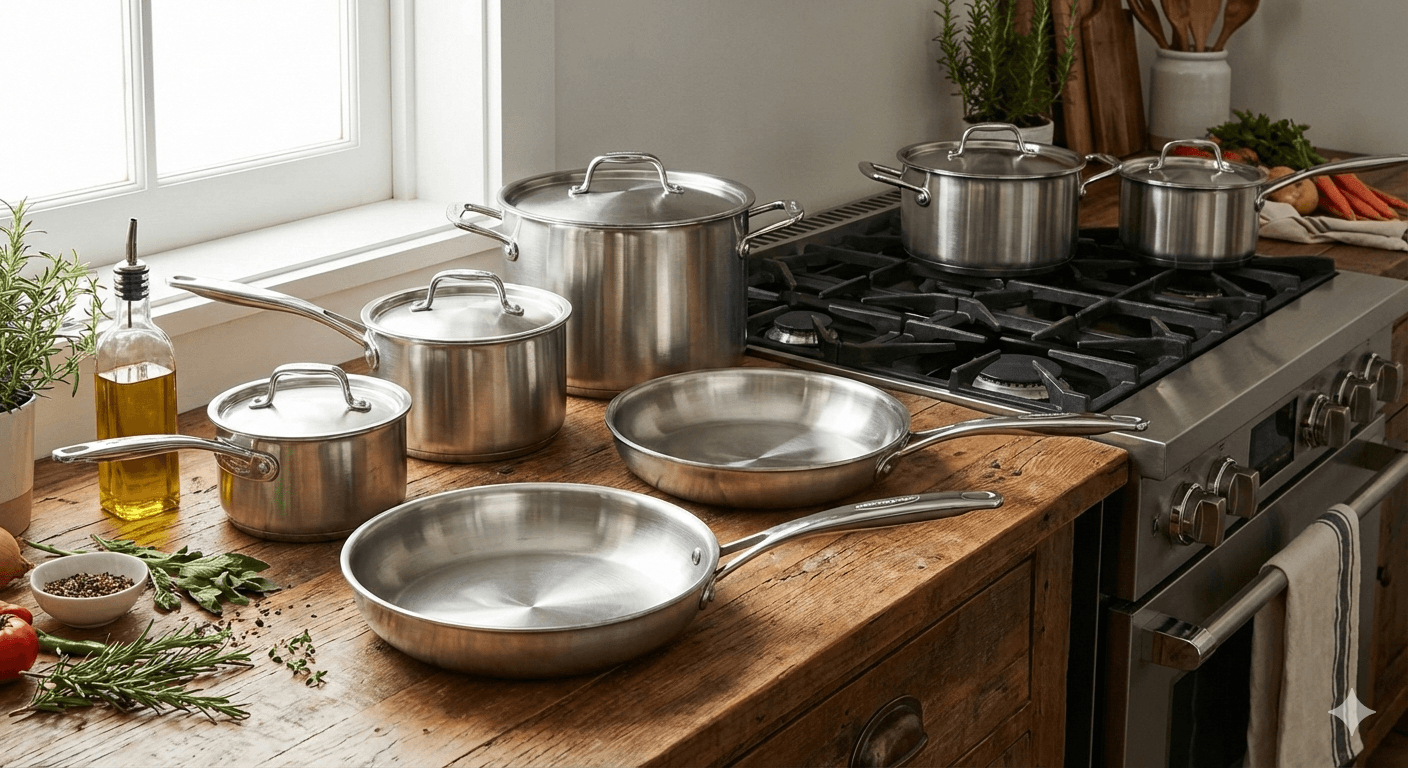
There's something satisfying about cooking in a stainless steel pan that's older than you are. No coating to baby, no scratches to worry about, no planned obsolescence. Just solid metal that conducts heat, develops a patina over time, and gets passed down through generations.
This is what cookware looked like before marketing departments convinced us we needed new pans every few years. Three European brands have been making professional-grade stainless steel cookware using the same principles for decades: Demeyere from Belgium, BK from the Netherlands, and De Buyer from France. These aren't lifestyle brands chasing trends. They're manufacturers selling tools to restaurants, hotels, and home cooks who expect their equipment to outlast their careers.
Lasting Standard: High-quality stainless steel pans from these three brands represent true Buy It For Life cookware. With proper care, they will outlive you. No coatings to wear out, no weak points to fail. The initial investment is higher, but spread over 30-50+ years of daily use, these pans cost less than replacing cheap cookware every few years.
Why Stainless Steel?
Before diving into specific brands, it's worth understanding why professional kitchens worldwide rely on stainless steel pans despite the rise of non-stick alternatives.
Stainless steel is virtually indestructible. You can use metal utensils, scrub aggressively, heat it to extreme temperatures, and deglaze with wine or vinegar without fear. It's non-reactive, meaning acidic foods won't interact with the metal. It develops fond (those flavorful browned bits) better than any other material, which is essential for proper sauces and deglazing.
The learning curve is real. Food will stick if you don't preheat properly or use enough fat. But once you understand the technique, stainless steel becomes the most versatile cookware material available. It's why professional kitchens stack their stations with stainless—not because chefs enjoy difficulty, but because it works reliably for decades without compromise.
The Three Brands: Quality at Different Price Points
Demeyere, BK, and De Buyer all make exceptional stainless steel cookware, but they occupy different positions in terms of technology, heritage, and price. The good news is that all three produce pans that will outlast you.
Brand Overview
🇧🇪Demeyere (Belgium, founded 1908)
The premium option with proprietary technologies like Silvinox (easy-clean finish), TriplInduc (exceptional heat distribution), and welded construction. Exceptional induction performance. Price: €€€€
Best for: Those who want the absolute best and appreciate engineering excellence
🇳🇱BK (Netherlands, founded 1851)
Excellent quality at more accessible prices. Multi-layer construction, solid build quality, and proven durability. Strong in the Benelux region. Price: €€
Best for: Value-conscious buyers who want lifetime quality without paying premium prices
🇫🇷De Buyer (France, founded 1830)
Professional-grade equipment used in Michelin-starred kitchens. Multiple product lines from entry-level to premium. Strong reputation for carbon steel as well. Price: €€-€€€
Best for: Home cooks who want the same equipment professionals use
Demeyere: Belgian Engineering at Its Finest
Demeyere represents the pinnacle of stainless steel cookware technology. This isn't hyperbole—their pans incorporate genuine innovations that improve cooking performance, not marketing gimmicks.
Their Silvinox treatment makes the stainless steel easier to clean and keeps it looking pristine longer by removing impurities from the surface. TriplInduc technology creates a seven-layer base that distributes heat exceptionally evenly, crucial for induction cooking but beneficial on any heat source.
Demeyere's high-end lines (Industry 5 and Proline) feature welded handles rather than riveted. This means no crevices inside the pan where food can get stuck—a professional kitchen priority that home cooks quickly learn to appreciate.
The company's Atlantis and Apollo lines offer different performance characteristics for specific tasks. The Atlantis saucier and frying pans are particularly renowned. Yes, a single Demeyere pan can cost €150-300, but it's engineered to perform flawlessly for 50+ years.
💡Worth Knowing
Demeyere pans are particularly exceptional on induction cooktops, where their TriplInduc technology really shines. If you have induction or are planning to switch, Demeyere offers measurably better performance than most competitors.
BK: Dutch Quality Without the Premium Price
BK makes the case that you don't need to spend Demeyere money to get lifetime cookware. Founded in 1851 and deeply rooted in Dutch cooking culture, BK produces stainless steel pans that will outlast their modest price tags by decades.
Their multi-layer construction (typically 5-ply in premium lines) provides even heat distribution. The fit and finish are excellent. The ergonomics are well-considered. What you're not paying for are cutting-edge proprietary technologies or premium brand positioning.
BK's Conical+ and Infinity lines represent their professional-grade offerings. These are pans you'll find in restaurant kitchens across the Netherlands and Belgium. They heat evenly, respond quickly to temperature changes, and develop beautiful fond for deglazing.
The value proposition is compelling: for €50-100 per pan, you're buying equipment that will perform admirably for 30-40 years. That's professional quality at prosumer prices. For many home cooks, BK represents the sweet spot between investment and return.
De Buyer: French Professional Heritage
Walk into a professional French kitchen and you'll likely see De Buyer's distinctive hammered copper or their stainless steel Affinity line. This is a company that's been supplying equipment to demanding chefs since 1830.
De Buyer's Affinity line features 5-ply construction with a thick aluminum core for excellent heat distribution. The pans are heavy—reassuringly so—and built for professional use. Riveted handles are designed for commercial dishwashers and decades of abuse.
What sets De Buyer apart is their range. They make everything from affordable entry-level stainless (Prima Matera) to high-end professional equipment. This means you can buy into the brand at different price points while knowing the manufacturing quality remains consistent.
The company is particularly respected for their carbon steel pans (Mineral B line), but their stainless steel cookware carries the same professional credibility. These are tools designed for people who cook for a living, which means they're engineered for reliability over aesthetics.
What They Have in Common
Despite different approaches and price points, these three brands share fundamental characteristics that separate them from mass-market cookware:
- Multi-layer construction: Stainless steel exterior and interior with aluminum or copper core for heat distribution
- Substantial weight: Quality materials and thick construction that won't warp
- Solid riveted or welded handles: No weak points that will fail over time
- Oven-safe to high temperatures: Typically 250-300°C
- Made in Europe: Consistent quality control and manufacturing standards
- Decades of proven performance: Not flavor-of-the-month brands
- Professional kitchen credibility: Used in commercial settings worldwide
These commonalities matter more than the differences. Whether you choose Demeyere, BK, or De Buyer, you're buying equipment that will outlive you and can be passed down to your children.
Which Brand Should You Choose?
The honest answer is that you can't go wrong with any of them. Your decision will likely come down to budget, cooking style, and what's readily available in your region.
Choose Demeyere if:
- • You want the absolute best performance and engineering
- • You cook on induction
- • You appreciate subtle quality differences
- • Budget isn't the primary concern
Choose BK if:
- • You want lifetime quality at accessible prices
- • Value matters as much as quality
- • You're in the Benelux region (better availability)
- • You want to equip a kitchen without massive investment
Choose De Buyer if:
- • You want proven professional equipment
- • French culinary tradition appeals to you
- • You like heavy, substantial cookware
- • You want flexibility across different product lines
How to Use Stainless Steel Pans
Stainless steel rewards proper technique. The good news is that once you learn these simple principles, stainless becomes as easy to use as any other cookware material:
- Preheat properly: Let the pan heat for 2-3 minutes on medium before adding fat
- Use enough fat: Oil or butter creates a barrier between food and metal
- Don't move food too soon: Let protein develop a crust before trying to flip
- Deglaze to clean: Add liquid to a hot pan and scrape up fond—this becomes your sauce
- Use medium heat: Stainless conducts heat efficiently; you rarely need high heat
- Water drop test: When water forms a rolling ball on the surface, the pan is ready
There's a reason professional chefs prefer stainless despite having access to every cookware technology imaginable. Once you develop the technique, stainless steel offers unmatched versatility, durability, and cooking performance.
Care and Maintenance
One of the best features of stainless steel is how low-maintenance it is:
- Dishwasher safe (though hand washing preserves the finish longer)
- Use Bar Keeper's Friend to remove stubborn stains and restore shine
- Boil water with baking soda to remove burnt-on food
- Metal utensils won't damage it
- No special storage requirements
- Rainbow discoloration from high heat is harmless and easily removed
Unlike non-stick pans that need babying and still fail after a few years, stainless steel gets better with age. A well-used pan with a slight patina actually performs better than a new one. This is cookware that improves over decades rather than degrading.
Building Your Pan Collection
You don't need a complete set. Professional kitchens mix and match based on task requirements. For most home cooks, three pans cover 90% of cooking needs:
- 24-26cm frying pan: Daily workhorse for searing, sautéing, pan sauces
- 20cm saucepan with lid: Grains, vegetables, small portions
- 24cm sauté pan or chef's pan with lid: Larger batches, braising, one-pan meals
Buy these three pieces in quality rather than a 12-piece set of mediocre cookware. You can add specialty pieces over time—a stockpot, a smaller frying pan, a saucier—but these three core pieces will handle the vast majority of your cooking.
The Math of Buy It For Life Cookware
Let's be honest about the investment. A quality stainless steel pan from these brands costs €60-200 depending on size and line. For a three-pan essential set, you're looking at €200-500.
A cheap non-stick pan costs €25-40 but needs replacing every 2-3 years. Over 40 years, that's €400-800 per pan in replacements. And that's assuming consistent pricing and not counting the environmental impact of throwing away cookware every few years.
Quality stainless steel costs more upfront but less over time. Much less. And unlike non-stick alternatives, these pans can be passed down. Your grandchildren could be cooking with them. That's not marketing romance—that's literal multi-generational durability.
The Verdict
In a world of planned obsolescence and disposable cookware, Demeyere, BK, and De Buyer represent a different philosophy: make it properly once, and it lasts forever.
These aren't the cheapest pans you can buy. They're the last pans you'll need to buy. That distinction matters if you're tired of replacing cookware, frustrated by declining quality, or simply want tools that honor the craft of cooking.
Whether you choose Belgian engineering, Dutch value, or French professional heritage, you're investing in equipment that will outlive you. Cookware that improves with age rather than degrading. Tools that can be passed down to the next generation.
That's what cookware looked like before marketing convinced us it should be replaced every few years. It's still what it looks like in professional kitchens where reliability matters more than trends.
About This Review
This review is based on extensive research into European cookware manufacturing, professional chef equipment preferences, and the documented longevity of quality stainless steel construction. We have no affiliation with Demeyere, BK, De Buyer, or any cookware manufacturer. Our goal is to help you make informed decisions about products built to last.