
The Microplane Rasp: When a Woodworking Tool Revolutionized the Kitchen
How a Canadian couple accidentally discovered that a carpenter's rasp makes the perfect kitchen tool, and why you need one.
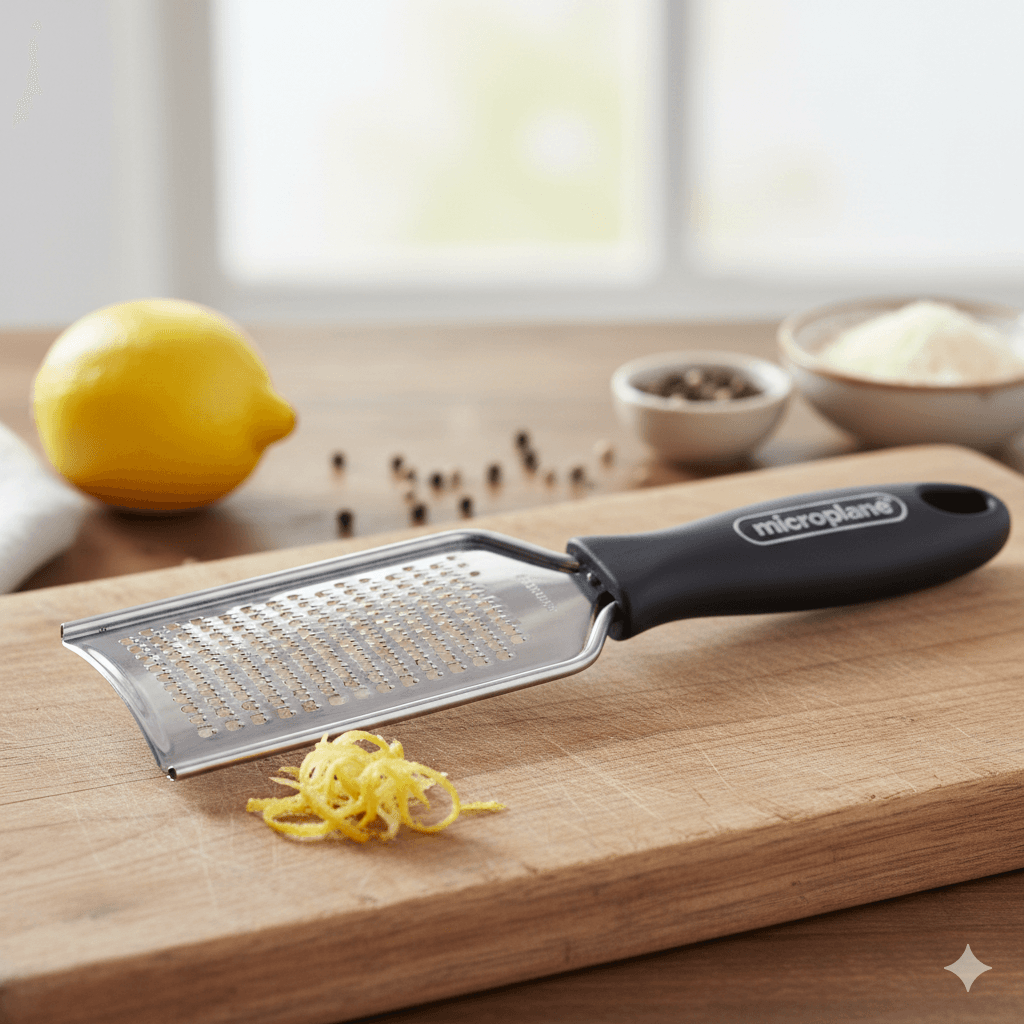
In 1994, a Canadian woman named Lorraine Lee borrowed her husband's woodworking rasp to zest an orange. The rasp, designed for shaping wood, produced the finest, most delicate citrus zest she'd ever seen. She told her husband Richard, who happened to own a hardware store, that someone should sell this tool for kitchens. He listened. The Microplane kitchen rasp was born, and traditional box graters have been somewhat obsolete ever since.
This is one of those rare cases where a product genuinely changed how people cook. Before Microplane, getting fine citrus zest meant struggling with a box grater or a specialized zester that worked poorly. Now, a quick pass over a Microplane gives you fragrant, feathery zest that tastes like the fruit instead of bitter pith. The same tool grates hard cheese into delicate shreds, turns whole nutmeg into fresh spice, and reduces garlic to smooth paste.
Lasting Standard: The Microplane rasp is as close to a perfect kitchen tool as you'll find. The blade will eventually wear out after years of heavy use, but these things last a decade or more in home kitchens. At around €15-25, it's an absurdly good value. Once you use one, traditional graters feel like medieval torture devices. This is essential.
The Woodworking Connection
The company started in 1990 as Grace Manufacturing, making precision woodworking tools. Their rasps and files used photo-etching technology to create incredibly sharp, precise teeth that could shape wood with remarkable control. Each tooth is actually a tiny blade formed by chemically etching stainless steel. This was specialized equipment for serious woodworkers.
When Lorraine borrowed Richard's rasp for kitchen use, she wasn't reaching for a kitchen tool. She grabbed a professional woodworking implement that happened to be lying around. The fact that it worked brilliantly for food was pure accident. But Richard recognized opportunity when his wife showed him what she'd discovered.
They tested the rasp with chefs and home cooks. The feedback was immediate: this changes things. The photo-etched teeth were so sharp and precisely formed that they could reduce even delicate ingredients to perfectly uniform pieces without tearing or mashing. Within a few years, professional kitchens had largely abandoned their traditional graters. Home cooks followed.
Why It Works So Well
Traditional graters have stamped or punched holes. The edges are never truly sharp, and they dull quickly. You end up pushing hard, which compresses whatever you're grating and releases juices before you want them released. Citrus pith gets mixed with zest. Cheese clumps. Chocolate melts from the friction. It's inefficient and frustrating.
Microplane's photo-etched teeth are different. Each one is formed by removing material around it, leaving a sharp, surgical edge. Because they're so sharp, they require almost no pressure. The food glides over the rasp, and the teeth do the work. Less pressure means less friction, which means ingredients stay cool and don't get compressed. Citrus zest comes off dry and fluffy. Cheese stays light. Garlic turns to paste without becoming watery.
What Microplane Does Better
- Citrus zest: Removes only the flavorful outer layer, leaving bitter pith behind
- Hard cheese: Grates Parmesan into delicate, melt-in-your-mouth shreds
- Fresh spices: Nutmeg, cinnamon stick, whole ginger become fine, aromatic powder
- Garlic: Reduces cloves to smooth paste without a press
- Chocolate: Creates delicate shavings that won't melt from friction heat
The design is also practical. The handle is comfortable, the blade is long enough to work efficiently, and the slight curve helps keep your knuckles away from the sharp surface. It's dishwasher safe, though hand washing is gentler on the blade. The teeth are stainless steel, so there's no rust or corrosion to worry about.
Which Model Should You Buy?
Microplane makes several models with different tooth sizes. For most home cooks, the Classic Zester/Grater (also called the Premium Classic) is the one you want. It has fine teeth perfect for citrus, cheese, and spices. This is the original kitchen rasp and still the best all-around option.
If you grate a lot of hard cheese or chocolate, the Coarse Grater has larger teeth that work faster for these tasks. Some people own both. At €15-25 each, having multiple sizes isn't a big investment.
Avoid the ultra-cheap knockoffs that have flooded the market. They look similar but use stamped teeth instead of photo-etching. They're dull from the start and get duller fast. The real Microplane costs a bit more but lasts years longer and works infinitely better. This is not the place to save €5.
How to Use It Properly
The biggest mistake people make with a Microplane is pressing too hard. You don't need pressure. Let the razor-sharp teeth do the work. A light touch gives you better results and extends the life of the blade.
For citrus zest, hold the fruit and move the rasp over it in short strokes. Rotate the fruit as you go to avoid the white pith. For cheese, hold the rasp at an angle over a bowl or plate and glide the cheese across the teeth. For garlic, peel the clove and rub it gently over the rasp until only the skin remains in your fingers.
💡Pro Tip
When zesting citrus, work over a piece of parchment paper or directly over your mixing bowl. The zest is so fine it can scatter if you're not careful. Also, freeze your hard cheese for 15 minutes before grating. It's easier to handle and creates even better shreds.
Care and Maintenance
The Microplane is low maintenance, but a few habits will keep it working well longer. Rinse it immediately after use so food doesn't dry in the teeth. If something gets stuck, use a soft brush (an old toothbrush works perfectly) to clean between the teeth. Don't scrub metal utensils against it or use abrasive cleaners.
Store it in a way that protects the blade. Many models come with a plastic sleeve. Use it. Tossing a Microplane loose in a drawer will dull the teeth and is also a good way to cut yourself reaching for something else. Some people hang theirs on a magnetic knife strip, which works well if you have wall space.
Eventually, after years of use, the teeth will dull. You'll notice you need to press harder and the results aren't as fine. When that happens, just replace it. These aren't heirloom tools meant to last forever. They're consumables with an exceptionally long lifespan. At the price point, replacement is easier and cheaper than trying to sharpen photo-etched teeth.
The Competition
Once Microplane proved the concept, other companies tried to compete. Some use similar photo-etching technology and work reasonably well. Others are cheap knockoffs with stamped teeth that barely function. If you're not buying Microplane, make sure you're getting photo-etched blades from a reputable manufacturer.
That said, Microplane pioneered this tool and still makes the best version. They're also a relatively small company that took a genuine innovation and built a sustainable business around it. The price difference between Microplane and a decent alternative is minimal, and the quality difference favors the original.
The Verdict
The Microplane rasp is one of those uncommon kitchen tools that's both transformative and inexpensive. It does things traditional graters simply cannot do, and it does them effortlessly. Whether you're making a quick weeknight pasta or an elaborate holiday meal, having fresh citrus zest, properly grated cheese, and real spice flavors available with minimal effort changes what's possible.
It also has a genuinely interesting backstory. A woodworking rasp that accidentally revolutionized kitchen prep is the kind of innovation you can't plan for. Someone had to actually try it, recognize what they'd discovered, and have the business sense to bring it to market. The Lee family did all of that.
If you don't own a Microplane, get one. If you own one that's several years old and starting to dull, it's time to replace it. At €15-25, this is among the highest value purchases you can make for your kitchen. Takes up almost no space, requires almost no maintenance, and improves dozens of dishes you already make.
About This Review
This review is based on extensive research into Microplane's history, the photo-etching manufacturing process, and decades of use by both professional chefs and home cooks. We have no affiliation with Microplane or any kitchen tool manufacturer. Our goal is to help you make informed decisions about products built to last.